By Kate Manning
This week every household across the country will receive a leaflet urging voters to vote No in the upcoming Lisbon Treaty referendum. Sent by the Freedom and Democracy Group which boasts Nigel Farage as their leader, the leaflet worryingly contains many blatant untruths.
The leaflet states, “Lisbon would further encourage the displacement of Irish workers and lower the wages for tens of thousands of Irish workers, many of whom would have to leave the country.”
In fact the Lisbon Treaty states that the EU does not have control over pay and the issue of accepting immigrants lies solely with the individual country. Why then would this feature in a leaflet intended to inform the Irish public? It would seem that the Freedom and Democracy Group are putting their own political interests above those of the Irish electorate.
The leaflet also features a statement about Corporate Tax:
“Ireland’s no vote to Lisbon halted EU moves to introduce a Common Consolidated Corporate Tax Base (CCCTB). The introduction of an EU Corporate Tax Base will take a jackhammer to Ireland’s economic future”
This claim relates to Article 113 of the Lisbon Treaty. The leaflet fails to mention that actually this Article does not relate to direct taxation such as Corporate Tax but rather indirect taxation. The Irish Government takes full control over corporate tax, contrary to these misleading claims by the Freedom and Democracy Group.
“Lisbon reduces member states' powers”
This is again false information. The fact is that the Lisbon Treaty will simplify the voting structure in Europe. This is desperately needed to facilitate for the increased number of Member States. Measures are also provided to ensure larger countries do not dominate decision making therefore protecting smaller countries like Ireland.
In relation to the guarantees that were achieved for Ireland, the leaflets maintains that “Brian Cowen had asked for legally binding guarantees. Instead he got worthless clarifications. They’re not worth the paper they’re written on!”
Actually the agreement the Taoiseach sought is legally binding, agreed by the heads of EU countries and is an international agreement. Already lodged with the UN it will become a Protocol if the Lisbon Treaty comes into force. The Freedom and Democracy Group failed to point out that this was successfully done before when Denmark wanted to opt out of a part of the Maastricht Treaty.
Unfortunately for Irish voters, the current Lisbon Treaty campaign is rife with untruths and scaremongering to facilitate certain political motives. Whether voting Yes or No on October 2nd, it is becoming increasingly important for Irish voters to strip down this Treaty to the bare facts. When reading information ask yourself, who wrote this? What are their political motives? What positive role have they played in Irish or European society? In the case of the Freedom and Democracy the answer to the last question is very little.
Showing posts with label East Constituency. Show all posts
Showing posts with label East Constituency. Show all posts
Monday, September 21
The Lisbonic Plague
By Eanna Kelly
"These are the stakes! To make a world in which all of God's children can live, or to go into the dark. We must either love each other, or we must die".
This excerpt was taken from the American television campaign, 'Daisy', whose premise was ‘fear sells’. The ad' was used to promote the candidacy of Johnson for the 1964 presidential election. The concept of the ad’ was revolutionary, in a sense, and highly provocative. A little girl is seen slowly counting the petals of a daisy when an ominous-sounding voice begins to count down a missile launch. The camera zooms in on the eye of the terrified girl until her pupil fills the screen and blackens it out. A mushroom cloud from a nuclear explosion replaces the shot. The message at the end is straightforward, vital and piercing: "The stakes are too high for you to remain at home."
http://www.youtube.com/watch?v=IkWAhuXtalw
Fear-mongering is used to influence political views. Post September 11th, the American Government utilised fear of another terrorist attack and exploited it to remain in office. ‘Shockvertising’ has also been prevalent throughout the two Lisbon campaigns. The Irish newspaper ‘Alive’ (which can be purchased at all good churches) recently peddled an article claiming that "under the Lisbon Treaty the EU could seize elderly people's savings and homes, and can take children off people who suffer from mild forms of alcoholism or depression; or who do not own a family home." This is positively stark raving lunacy! Incidentally, this article led to Deirdre De Burca announcing that the paper was the "Irish Taliban"……….although I would imagine its level of human rights violations is significantly less!
Fear and advertising now exist concurrently. What about those ads that show bacteria lurking in every part of your house? The post-apocalyptic novel ‘World War Z’ summed it up perfectly when the billionaire who made his fortune with a phony vaccine asked: "People selling their products? No. People selling the fear of you having to live without their products." Coir’s campaign, which suggests that the minimum wage could become €1.84 per person, I mean, where did this figure even come from? It’s just not plausible! The Charter of Fundamental Rights safeguards rights such as those of fair and just working conditions. The least I can say for the Yes campaign is that they don’t advocate anything as glaringly fallacious as this (although their campaign is both insipid and uninformative…one only has to look at Labour’s forthright and unimaginative ‘Vote Yes’ poster.)
I shall say this: sleep with one eye open; don’t get sucked in by misinformation! The battle of Lisbon rages onwards- there are acrimonious arguments and vehement venting, yes, but at last there is a public debate to savour! Polarised viewpoint...but no indifference this time around.
Monday, September 7
Will it be a Yes from the East?

By Kate Manning and Grace Campbell
The young voters of Ireland face a tough decision. No, not what flavour Pot Noodle to get, but one which could essentially determine their future as Europeans. Whether you are for or against this Treaty, get the correct information before you vote. A good place to start is http://www.lisbontreaty2009.ie/ or http://www.europeanmovement.ie/, where you will find clear, concise and waffle-free information. Ignore the posters, ignore the politicians and just vote on the facts.
Three young voters from the East Constituency share why they will vote Yes on October 2nd. Michael is 21 and from Newbridge in Kildare. “A friend of mine is very active in politics and she gave me information on what the Treaty is about. After reading up on it I was amazed at the difference between the facts and the rumours. I thought this Treaty would bring abortion into the country and that I would be conscripted into an EU army. It’s crazy how many lies are being told. If I hadn’t read up on it I probably would be voting No.” Michael gave information to his friends and encouraged them to read before they made a decision. “Now around ten of my mates are voting Yes.”
Marie is 19 and from Carlow. She is preparing to return to UCD for her second year as an Arts student. “My family are all voting Yes for the second time. The stuff that is on the posters makes me want to vote Yes even more... it’s not true so why would I vote the way they want us to?” Marie fears the reception Ireland will get in Europe if the No side succeed will be “devastating especially for people our age... we were born into Europe and benefited from it so far, so we should cooperate.”
James from Athy is 24 and in full time employment. “I voted No the last time around probably because I was afraid of what would happen to Ireland. Some said we would lose our influence in Europe... I didn’t know who to believe...and couldn’t find the facts.” Recently James decided to vote Yes because of the guarantees that were sought by the Irish Government. “Any worries I had were sorted by the guarantees...and I accept this Treaty will make Europe more efficient.” James has since become active on Boards.ie and Politics.ie telling other younger voters why he has changed his mind. “There is still a lot of uncertainty among young people but I have been telling them what sites to go on and what is or isn’t fact.”
Public debate over the next few weeks will feature claims however ridiculous from both sides urging voters to side with them to secure Ireland’s future. While the excitement of this referendum will keep voters enthralled, it is imperative to be aware of the facts. Separate the typical election drivel from what this Treaty really involves and bear in mind that for every decision made there will be a consequence.
Friday, June 12
To Brussels Batman!!!
By Kate Manning
The people have spoken. The elections are over and MEPs all over Europe are organising their life for their move to Brussels. Former MEPs are possibly still coming to terms with their defeat and wondering what went wrong. Unsuccessful candidates are hoping a general election is on the way soon so they can put themselves forward for that. Journalists are back to looking for stories rather than being bombarded with leads on candidates.
On reflection, this year’s elections were most definitely not short on drama. In Ireland as a whole, the smooth election of Nessa Childers in the East Constituency was not predicted, as a battle between herself and Senator John Paul Phelan was supposed to be on the cards. Instead sitting MEP Liam Aylward faced the uphill challenge. Both Mr Aylward and Senator Phelan hail from Kilkenny with Aylward coming up with the goods in the end. Younger voters, in particular Young Fine Gael members, were devastated that their main man failed to succeed.
Libertas had a humiliating defeat with no candidates securing a seat in Ireland and Declan Ganley announcing his exit from politics. While many will find this decision to be the best decision he has ever made, the fact remains, Irish voters could not find a good enough reason to bring Libertas to the Parliament. Perhaps it was the lack of a clear, concise and across the board manifesto that caused the end result.
In Dublin, there was always going to be a fight to the end as the constituency was to lose a seat. Mary Lou McDonald and Eoin Ryan lost their seat while Socialist Joe Higgins secured the last seat. While Eoin Ryan’s losing of his seat was potentially because of his party and the current economic climate, Mary Lou McDonald lost hers on her dreadful attendance record in the Parliament. The voters would prefer to have Joe Higgins criticising the Parliament from Brussels rather than Ms McDonald who spoke out against the Parliament from back home.
In the rest of Europe as a whole, it was good news for the Parliament as the centre right EPP ED secured 263 seats maintaining its role as the largest grouping. Even with the desertion of the Tories and Czech MEPs, it remains on top.
Libertas only managed to secure one seat in the whole of Europe, the lone rider being Philippe de Villiers, a French MEP. This caused even further embarrassment for leader Declan Ganley.
It was bad news for Britain's Labour Party as they received a serious backlash from the voters, which saw the BNP secure two seats in the Parliament. The BNP are very much anti-EU and are desperate to call a halt to immigration. The election of two BNP MEPs is worrying and Nick Griffin’s (BNP leader) pelting with eggs last week is proof that this latest move in Britain will have huge consequences for the Parliament.
In the Netherlands, Geert Wilders' Freedom Party won four seats. The party is anti-Europe, anti-Islamic and anti everything that will raise an eyebrow. You can be guaranteed that they will make noise in the Parliament with the BNP MEPs. Great, just what the Parliament needs to slow it down!
The people have indeed spoken. I only wish the rest of Europe (in particular Britain) had spoken as commendably as Ireland did.
The people have spoken. The elections are over and MEPs all over Europe are organising their life for their move to Brussels. Former MEPs are possibly still coming to terms with their defeat and wondering what went wrong. Unsuccessful candidates are hoping a general election is on the way soon so they can put themselves forward for that. Journalists are back to looking for stories rather than being bombarded with leads on candidates.
On reflection, this year’s elections were most definitely not short on drama. In Ireland as a whole, the smooth election of Nessa Childers in the East Constituency was not predicted, as a battle between herself and Senator John Paul Phelan was supposed to be on the cards. Instead sitting MEP Liam Aylward faced the uphill challenge. Both Mr Aylward and Senator Phelan hail from Kilkenny with Aylward coming up with the goods in the end. Younger voters, in particular Young Fine Gael members, were devastated that their main man failed to succeed.
Libertas had a humiliating defeat with no candidates securing a seat in Ireland and Declan Ganley announcing his exit from politics. While many will find this decision to be the best decision he has ever made, the fact remains, Irish voters could not find a good enough reason to bring Libertas to the Parliament. Perhaps it was the lack of a clear, concise and across the board manifesto that caused the end result.
In Dublin, there was always going to be a fight to the end as the constituency was to lose a seat. Mary Lou McDonald and Eoin Ryan lost their seat while Socialist Joe Higgins secured the last seat. While Eoin Ryan’s losing of his seat was potentially because of his party and the current economic climate, Mary Lou McDonald lost hers on her dreadful attendance record in the Parliament. The voters would prefer to have Joe Higgins criticising the Parliament from Brussels rather than Ms McDonald who spoke out against the Parliament from back home.
In the rest of Europe as a whole, it was good news for the Parliament as the centre right EPP ED secured 263 seats maintaining its role as the largest grouping. Even with the desertion of the Tories and Czech MEPs, it remains on top.
Libertas only managed to secure one seat in the whole of Europe, the lone rider being Philippe de Villiers, a French MEP. This caused even further embarrassment for leader Declan Ganley.
It was bad news for Britain's Labour Party as they received a serious backlash from the voters, which saw the BNP secure two seats in the Parliament. The BNP are very much anti-EU and are desperate to call a halt to immigration. The election of two BNP MEPs is worrying and Nick Griffin’s (BNP leader) pelting with eggs last week is proof that this latest move in Britain will have huge consequences for the Parliament.
In the Netherlands, Geert Wilders' Freedom Party won four seats. The party is anti-Europe, anti-Islamic and anti everything that will raise an eyebrow. You can be guaranteed that they will make noise in the Parliament with the BNP MEPs. Great, just what the Parliament needs to slow it down!
The people have indeed spoken. I only wish the rest of Europe (in particular Britain) had spoken as commendably as Ireland did.
Monday, June 8
Plenty more where that came from
By Kate Manning
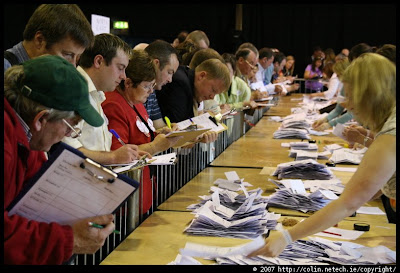
People running all over the place, phones hopping and results coming in every minute. That was KCLR96fm, the local radio station for Carlow and Kilkenny on Saturday. It was election count day and the station newsroom was certainly alive.
The early morning was relatively peaceful. News clips to portray the anticipation among the candidates had to be gotten. European and local election hopeful, Kathleen Funchion spoke of her “nervousness about the day ahead”. Green TD Mary White told of the busy day facing everyone and hoped it would end up favouring her party. The stations Journalists were called to get feedback on the atmosphere that was beginning to build at the count-centres.
With so much newsworthy material coming from the count centres, it was difficult to find and develop the “In other news” stories. Having to condense the election feedback proved a challenge and most bulletins became extended. A fatal stabbing in Carlow had to be followed up on and it was tricky to manage that with the elections.
With so much newsworthy material coming from the count centres, it was difficult to find and develop the “In other news” stories. Having to condense the election feedback proved a challenge and most bulletins became extended. A fatal stabbing in Carlow had to be followed up on and it was tricky to manage that with the elections.
Election results were arriving by the minute and the news stories kept evolving. A bulletin could be broadcast and by the time it was finished another candidate could have been elected. Local listeners began calling the newsroom looking for tit-bits of results that they had missed.
By 11.30 am, word had reached the station that the tallies showed that Mairead McGuinness looked on course to reclaim her seat in the European Parliament. Surprisingly, Nessa Childers also looked to have polled well and was ahead of Fianna Fáil’s sitting MEP Liam Aylward. Predictions emerged which indicated that John Paul Phelan (Fine Gael) would battle with Aylward over the third seat. Nothing was certain at this time and a lot could change.
By 11.30 am, word had reached the station that the tallies showed that Mairead McGuinness looked on course to reclaim her seat in the European Parliament. Surprisingly, Nessa Childers also looked to have polled well and was ahead of Fianna Fáil’s sitting MEP Liam Aylward. Predictions emerged which indicated that John Paul Phelan (Fine Gael) would battle with Aylward over the third seat. Nothing was certain at this time and a lot could change.
The day pretty much flew. The buzz of what was going on around the local area and the country never eased. Looking back the unpredictability and the fast pace was definitely worth doing again. I would recommend for anyone to get involved in elections. I followed it and was involved in it from start to finish and there was nothing about it that I didn’t like. Even to just get involved on election count day and witness the results being read out with the candidates either celebrating or commiserating with each other is a great experience. While I chose to get involved on the media side of things, there are other ways to get involved. You could join in the campaign trail of a candidate you’ve taken a shine to. Or put yourself forward to run in the elections. It’s achievable. Either way, to get a feel for the diverse personalities that represent our country at European level and our home towns at local level is important and can be quite entertaining.
With the second Lisbon Treaty referendum fast approaching, not to mention the constant threat of a general election potentially becoming a reality, Irish politics will be fast-paced and exciting for the indefinite future.
Bring it on I say!
Thursday, June 4
Tonight Matthew, I'm going to be....an MEP
By Kate Manning
From the recent TNS/MRBI poll the East Constituency looks to be easily predictable. Mairead McGuinness (Fine Gael) is a certainty and has been from day one of the campaign trail. She will embark on her second term in the European Parliament and deservedly so.
Having spent time with Mairead in Brussels this March, it’s clear she is dedicated to Europe and works extremely hard. It became apparent quite early on in my trip to Brussels that her peers, not just from Ireland, hold her in high regard. She will most definitely spend the next five years in the European Parliament. However, I don’t believe she will secure her seat by as great a margin as the previous polls have suggested as a vote management strategy by Fine Gael in the south of the constituency will see many people transferring their votes to John Paul Phelan
Liam Aylward (Fianna Fáil) is another certainty. Having performed well in the opinion polls, he has a lot of support in the constituency particulary in the Carlow/Kilkenny area. He too has worked hard and deserves his seat. I spent some time with him also in Brussels and I was impressed with how passionately he spoke about Europe and his role in the Parliament. Also with Fianna Fail possibly about to bear the brunt of the nations anger, diehard supporters of the party will make sure Liam gets the vote.
Nessa Childers (Labour) also looks set to take a seat. She launched a successful campaign and I think a lot of people will vote for her because of her father. I met her briefly and was not impressed at her dismissive nature. Maybe it is because I’m young but at the end of the day I still have a vote. Also while on air in KCLR the Carlow/Kilkenny radio station, she made a serious mistake by saying she did not “have a huge knowledge about agriculture”. Unfortunately agriculture is an essential part of the EU. Regardless of this matter, she does look like the favourite to win the third seat, just ahead of John Paul Phelan.
Being a young voter, I would have liked to have seen John Paul Phelan take the last seat. His age plays a big part in this as does his honesty about not knowing everything about Europe but being willing to learn. I thought that would have been a journey all younger voters could embark on with him if he were successful. No doubt he would have raised awareness for the EU here in Ireland. Unfortunately, it looks unlikely that he will succeed. Pity though.
So my prediction: Mairead McGuinness, Liam Aylward and Nessa Childers to take the three seats.
From the recent TNS/MRBI poll the East Constituency looks to be easily predictable. Mairead McGuinness (Fine Gael) is a certainty and has been from day one of the campaign trail. She will embark on her second term in the European Parliament and deservedly so.
Having spent time with Mairead in Brussels this March, it’s clear she is dedicated to Europe and works extremely hard. It became apparent quite early on in my trip to Brussels that her peers, not just from Ireland, hold her in high regard. She will most definitely spend the next five years in the European Parliament. However, I don’t believe she will secure her seat by as great a margin as the previous polls have suggested as a vote management strategy by Fine Gael in the south of the constituency will see many people transferring their votes to John Paul Phelan
Liam Aylward (Fianna Fáil) is another certainty. Having performed well in the opinion polls, he has a lot of support in the constituency particulary in the Carlow/Kilkenny area. He too has worked hard and deserves his seat. I spent some time with him also in Brussels and I was impressed with how passionately he spoke about Europe and his role in the Parliament. Also with Fianna Fail possibly about to bear the brunt of the nations anger, diehard supporters of the party will make sure Liam gets the vote.
Nessa Childers (Labour) also looks set to take a seat. She launched a successful campaign and I think a lot of people will vote for her because of her father. I met her briefly and was not impressed at her dismissive nature. Maybe it is because I’m young but at the end of the day I still have a vote. Also while on air in KCLR the Carlow/Kilkenny radio station, she made a serious mistake by saying she did not “have a huge knowledge about agriculture”. Unfortunately agriculture is an essential part of the EU. Regardless of this matter, she does look like the favourite to win the third seat, just ahead of John Paul Phelan.
Being a young voter, I would have liked to have seen John Paul Phelan take the last seat. His age plays a big part in this as does his honesty about not knowing everything about Europe but being willing to learn. I thought that would have been a journey all younger voters could embark on with him if he were successful. No doubt he would have raised awareness for the EU here in Ireland. Unfortunately, it looks unlikely that he will succeed. Pity though.
So my prediction: Mairead McGuinness, Liam Aylward and Nessa Childers to take the three seats.
Monday, June 1
Eurosceptic? No you’re a sceptic
 By Kate Manning
Newton famously proved that “for every action there is an equal and opposite reaction”. Well for every political organisation, party and belief there is an opposing side. Nowhere is this more evident than in the European Parliament.
Libertas, which derived from a think-tank set up by Declan Ganley, became a vocal critic of the Lisbon Treaty. Having mounting a successful no campaign,, Libertas have since set their sights on winning seats in the European Parliament. While some perceive Libertas as being anti-EU, they disagree. The problem for them is that “the once honest and inclusive governance of the Union has become unaccountable, murky, anti-democratic.”
Then there is the Independence/Democracy Group. Some of their members are from the UK Independence Party who advocate the “complete withdrawal of their country from the EU”. The leaders of the ID Group are Nigel Farage (UKIP) and Irelands Kathy Sinnott (Ind).
After the results of the Lisbon referendum in Ireland were revealed in June 2008, members of the ID Group filed into the European Parliament wearing green jerseys saying “Respect the Irish No Vote”. Avril Doyle MEP controversially responded by saying “Respect the Irish NO Vote". How things could have been different if only our British colleagues had come to this conclusion a century ago!” Miaow!
The Czech President Vaclav Klaus is another strong critic of the European Parliament. Having sided with the Libertascamp over Lisbon, Klaus visited Ireland in November of last year. According to EU blogger Stanley Krossick he “described Mr Ganley as a 'dissident' in the mould of former Soviet-era dissidents in his own country”. Interesting, as his state currently holds the EU Presidency.
MEPS from the UK Conservative Party have always been members of the largest grouping in the European Parliament; the EPP. After the European elections this week, they will form their own centre-right grouping with some Czech and Polish MEPs. The Tories are eager to create a stronger Eurosceptic voice in Parliament. The Financial Times reports that this could cause “serious divisions and will not be easily laid to rest” in Britain. Not to mention what it will do to their influence in Brussels.
Some would argue that opinions and groupings such as those mentioned above are detrimental to democracy. However, not allowing them to voice their concerns regarding such a huge institution would undermine everything that democracy entails. Critics are needed in the European Parliamentas they encourage public debate. However, there has got to be a line which should not be crossed and behaviour like that of the ID Group at the time of the Lisbon Referendum only serves to make a mockery of the EU. For all their condemnation of the Parliament, the UKIP and BNP MEPs still make a living out of the Parliament and Libertas struggle to have the same policies in all the European Member States, which was seen in the debate on immigration and free borders. Constructive debates are essential, bold children at the back of the classroom are not.
Thursday, May 28
Behind every great party…
 By Kate Manning
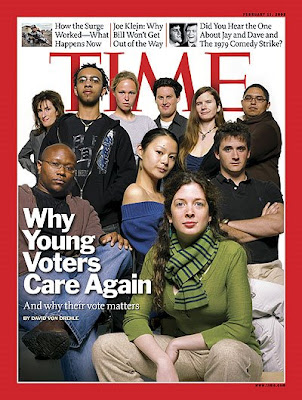
Starting college this year? Feeling nervous about starting out on your own? Or are you interested in meeting new people and becoming more active in your community? You don’t have to be a dinosaur to get involved in politics. Every party in Ireland has youth organisations which are always open to new members. Even the most skilled politicians have to start somewhere.
Fine Gael, Fianna Fáil and Sinn Féin were all contacted by email as that would be a common method used by young voters to submit a query or find information. As yet there has been no response from youth representatives in either Sinn Fein or Fianna Fail. Young Fine Gael (YFG) responded that same day.
Young Fine Gael was set up by former Taoiseach Garret Fitzgerald in 1977. Since then the organisation has strengthened in numbers with branches all over the country.. Young Fine Gael is open to members from the age of 15 to 30.
Young Fine Gael was set up by former Taoiseach Garret Fitzgerald in 1977. Since then the organisation has strengthened in numbers with branches all over the country.. Young Fine Gael is open to members from the age of 15 to 30.
Sarah Moore is the Director of Campaigns for Young Fine Gael. From Wexford, she has taken some time off from her work as a nurse to concentrate on the upcoming elections. “I think now is a gripping time to be involved in politics and Young Fine Gael is a great organisation that offers a fresh approach with new ideas. We are an autonomous organisation, in that we are not dictated to by the senior party. Young Fine Gael has had more members out canvassing than ever before and Fine Gael has a large number of young candidates.”
With colleges now winding down for the summer holidays, a wide-reaching platform for informing and including younger voters is in danger and could be harmful to a political campaign. Ms Moore said “In some respects it most certainly will affect candidates. However, looking at areas such as south County Wexford, we are delighted to have the college people back around as they are now available to canvass”.
A member of the Youth of the European People’s Party (YEPP), Young Fine Gael aims to foster relations with other youth groups throughout Europe. “YFG has held the vice presidency of the organisation which is a huge achievement for a political organisation from a small country, in European terms. YEPP hold seminars on European issues to which Young Fine Gael sends representatives and we have established an International Committee within our own organisation where our members can debate European issues and regularly keep in touch with YEPP.”
Ms Moore is aware that there is a need to bring European issues to the younger voters. “Branches have gone on trips to Brussels to visit the MEPs and the Parliament to see for themselves what actually goes on and can then report back to their peers that Brussels is a place that is good for Ireland.”
“I certainly consider myself a proud European and in these times of economic uncertainty I think we need to ensure Ireland's future at the heart of Europe.”
Wednesday, May 27
Irish language recognised but under-utilised at EU level
by Grace Campbell

Tomás Sharkey of Sinn Féin, speaking in Navan Co. Meath, stressed the significance of the Irish language in the East constituency and how the use of the national language in the European Parliament strengthens the overall identity of Ireland in the EU.
Mr. Sharkey, who is running for the upcoming European elections in the East, feels that even though the Irish language is officially recognised in the European Parliament that the use of the language is “not taken far enough.”
He said: “That’s not because the staff of the Commission or the Parliament is against Irish, it’s because the Irish government won’t provide the qualified staff.”
Mr. Sharkey is a fluent Irish speaker and teacher of the language. He has recently been in negotiations with the translation department in the European Parliament to overcome the obstacles that currently stand in the way of the Irish language flourishing at EU level. “If somebody speaks in English or any other language it does not get translated into Gaeilge,” said Mr. Sharkey.
One of the major problems compounding this issue is the lack of Irish MEPs who speak the national language. “The biggest threat is from our own home base politicians who refuse to represent our culture and our heritage there,” said Mr. Sharkey. “We do have a serious lack of skills among the Irish MEPs in their ability to speak Irish in the Parliament.”
Mr. Sharkey proposes to establish a “centre of excellence” in the Gaeltacht area of Rath Cairn, Co. Meath to give existing translators in Brussels the chance to develop their Irish language skills and to increase jobs for Irish people to work in Brussels as translators.
“We have a great opportunity with the new Irish living here now,” said Mr. Sharkey. “Those children who are bilingual and trilingual are going to be the future linguists for Ireland.”
The East constituency boasts a small Gaeltacht region compared to other constituencies but this does not seem to deter constituent’s interest in the national language. According to Mr. Sharkey “A study came out last month from the National University of Maynooth that found that support for the Irish language is strongest in Leinster.”
He said “We don’t have a big geographical Gaeltacht but we have, as a constituency, the strongest block of people in Ireland who support the Irish language.”
Mr. Sharkey added “We have had the biggest growth of all-Irish primary and secondary schools in this part of the country. We are going to see less ‘all day’ Irish speakers but ‘every day’ Irish speakers instead. There will be more people who will have the opportunity to use the Irish language throughout their working lives.”

Tomás Sharkey of Sinn Féin, speaking in Navan Co. Meath, stressed the significance of the Irish language in the East constituency and how the use of the national language in the European Parliament strengthens the overall identity of Ireland in the EU.
Mr. Sharkey, who is running for the upcoming European elections in the East, feels that even though the Irish language is officially recognised in the European Parliament that the use of the language is “not taken far enough.”
He said: “That’s not because the staff of the Commission or the Parliament is against Irish, it’s because the Irish government won’t provide the qualified staff.”
Mr. Sharkey is a fluent Irish speaker and teacher of the language. He has recently been in negotiations with the translation department in the European Parliament to overcome the obstacles that currently stand in the way of the Irish language flourishing at EU level. “If somebody speaks in English or any other language it does not get translated into Gaeilge,” said Mr. Sharkey.
One of the major problems compounding this issue is the lack of Irish MEPs who speak the national language. “The biggest threat is from our own home base politicians who refuse to represent our culture and our heritage there,” said Mr. Sharkey. “We do have a serious lack of skills among the Irish MEPs in their ability to speak Irish in the Parliament.”
Mr. Sharkey proposes to establish a “centre of excellence” in the Gaeltacht area of Rath Cairn, Co. Meath to give existing translators in Brussels the chance to develop their Irish language skills and to increase jobs for Irish people to work in Brussels as translators.
“We have a great opportunity with the new Irish living here now,” said Mr. Sharkey. “Those children who are bilingual and trilingual are going to be the future linguists for Ireland.”
The East constituency boasts a small Gaeltacht region compared to other constituencies but this does not seem to deter constituent’s interest in the national language. According to Mr. Sharkey “A study came out last month from the National University of Maynooth that found that support for the Irish language is strongest in Leinster.”
He said “We don’t have a big geographical Gaeltacht but we have, as a constituency, the strongest block of people in Ireland who support the Irish language.”
Mr. Sharkey added “We have had the biggest growth of all-Irish primary and secondary schools in this part of the country. We are going to see less ‘all day’ Irish speakers but ‘every day’ Irish speakers instead. There will be more people who will have the opportunity to use the Irish language throughout their working lives.”
Monday, May 25
Molly Malone meets Europe
By Kate Manning 
The sun shone. A sea of blue flags mixed with speckles of green flags filled the stadium. The crowd chanted the infamous Molly Malone. A European Union flag in the midst of all the excitement.
The Heineken Cup final 2009 is a perfect example of how Europe is celebrated. This year saw Leinster take on Leicester in a stadium packed to capacity with screaming fans.
Brian from Munster bought his ticket for the final in the hope that Munster would be featuring in it. “I said I might as well go and support Leinster because they’re an Irish team and I think it’s important to support Ireland when you can. Obviously I couldn't bring myself to wear a Leinster jersey but I don’t think anyone can blame me for that after the semi-final.”
Patrick was in Murrayfield to support Leicester his home team. He said “I’m gutted we didn’t win but Leinster played a good game and were the best team on the day. I saw some young lads walking round with a European flag earlier and I thought that was a nice gesture as it kind of says we’re in it together even though we’re competing against each other today. Congratulations, you deserved it. It’s a great achievement to be at the top in Europe.”
Jonathan is a Welshman and when asked why he was attending a match between an Irish and an English team he said “We’re all European so in a way I suppose yeah I felt like I could go and shout for whatever team I wanted. I don’t really know if I would be as aware of being European until I go to something like this. You would forget sometimes. Then feeling comfortable shouting for Leinster in a Heineken Cup final kind of reminds you.”
If this sense of unity expressed by these three men is a product of European integration, it serves as a reminder that while there will be challenges to face on our own, there will always be the support of 27 other countries. Withh Leinster winning the Heineken Cup this year, Munster winning it last year and in 2006 and Ulster coming out on top in 1999, Ireland is not only a part of Europe but at the forefront. While you cannot choose your own players for your rugby team, you can choose your own MEP.

The sun shone. A sea of blue flags mixed with speckles of green flags filled the stadium. The crowd chanted the infamous Molly Malone. A European Union flag in the midst of all the excitement.
The Heineken Cup final 2009 is a perfect example of how Europe is celebrated. This year saw Leinster take on Leicester in a stadium packed to capacity with screaming fans.
Brian from Munster bought his ticket for the final in the hope that Munster would be featuring in it. “I said I might as well go and support Leinster because they’re an Irish team and I think it’s important to support Ireland when you can. Obviously I couldn't bring myself to wear a Leinster jersey but I don’t think anyone can blame me for that after the semi-final.”
Patrick was in Murrayfield to support Leicester his home team. He said “I’m gutted we didn’t win but Leinster played a good game and were the best team on the day. I saw some young lads walking round with a European flag earlier and I thought that was a nice gesture as it kind of says we’re in it together even though we’re competing against each other today. Congratulations, you deserved it. It’s a great achievement to be at the top in Europe.”
Jonathan is a Welshman and when asked why he was attending a match between an Irish and an English team he said “We’re all European so in a way I suppose yeah I felt like I could go and shout for whatever team I wanted. I don’t really know if I would be as aware of being European until I go to something like this. You would forget sometimes. Then feeling comfortable shouting for Leinster in a Heineken Cup final kind of reminds you.”
If this sense of unity expressed by these three men is a product of European integration, it serves as a reminder that while there will be challenges to face on our own, there will always be the support of 27 other countries. Withh Leinster winning the Heineken Cup this year, Munster winning it last year and in 2006 and Ulster coming out on top in 1999, Ireland is not only a part of Europe but at the forefront. While you cannot choose your own players for your rugby team, you can choose your own MEP.
Thursday, May 21
No Excuses.com
If you are eligible to vote you are over 18 and an adult. The onus is now on you to inform yourself. To vote is a privilege. Check out the websites below or embark on some educational bebo/facebook stalking of the Ireland East candidates.
Liam Aylward MEP (Fianna Fáil) has his own website
Thomas Byrne TD (Fianna Fáil) has his own blog . This is impressive as it looks like a lot of time goes into it. He couldn’t be located on Twitter or BeBo.
To find out more about Fianna Fail or Ogra Fianna Fail check out: Twitter, Facebook, YouTube or Flickr.
Mairead McGuinness MEP (Fine Gael) has her own website. This is nicely organised and full of photographs. It features her own blog which gives a good insight into her personality. She is on Facebook and has videos on BeBo.
Senator John Paul Phelan (Fine Gael) has his own website. This is possibly not as up to date as it could be. Senator Phelan is on BeBo and has also recently joined Twitter which he updates on a daily basis.
To read more about Fine Gael log onto http://www.finegael.org/ or find them on Facebook and Facebook.
Nessa Childers (Labour) has her own website. This is bright and user friendly. She also has a blog on this site. However the blog focuses more on the campaign trail rather than showing her personality. She is on Twitter and BeBo but her Bebo site is lacking in information and members.
You will find more on the Labour Party on http://www.labour.ie/, Twitter and Facebook. Labour Youth are on Bebo.
Thomas Sharkey (Sinn Féin) does not have his own website. Nothing could be found using Google, BeBo, Facebook, or Twitter.
Kathleen Funchion (Sinn Fein) also does not have her own site. When you google her name a blog comes up from 2007 on te Sinn Fein website when she ran for the General Election but was unsuccessful. She could not be found on Facebook, Twitter or Bebo.
Sinn Fein have their own site. They are also on Facebook, Bebo and Twitter.
Raymond O’Malley (Libertas) has his own blog
To read more about Libertas check out http://www.libertas.eu/ and click on Ireland. If you want to put faces to the names then check out Flickr.
Jim Tallon (Independent) does not have his own website and is noton Facebook or Twitter. There are some video’s of him on YouTube and BeBo which are strange to say the least. Check out http://www.youtube.com/results?search_query=jim+tallon&search=Search
Michael Grealy (Independent) does not have a personal website. Nothing could be found using Google, Facebook, Bebo or Twitter.
Paddy Garvey (Independent) also does not have a personal website. Nothing could be found using Google, Facebook, Bebo or Twitter.
It is interesting to note that the candidates who are most active on networking sites and have their own websites seem to fare better in the Irish Times/TNS mrbi poll for the East Constituency. So there you have it. The young vote does count. which is easy to use and laid out in a straight forward way. What is useful for a young voter is that he has links to information on studying, working and travelling in Europe. He is also on Facebook. although whether he writes it himself is questionable as he refers to himself in the third person. He is also on Facebook and Twitter.
Liam Aylward MEP (Fianna Fáil) has his own website
Thomas Byrne TD (Fianna Fáil) has his own blog . This is impressive as it looks like a lot of time goes into it. He couldn’t be located on Twitter or BeBo.
To find out more about Fianna Fail or Ogra Fianna Fail check out: Twitter, Facebook, YouTube or Flickr.
Mairead McGuinness MEP (Fine Gael) has her own website. This is nicely organised and full of photographs. It features her own blog which gives a good insight into her personality. She is on Facebook and has videos on BeBo.
Senator John Paul Phelan (Fine Gael) has his own website. This is possibly not as up to date as it could be. Senator Phelan is on BeBo and has also recently joined Twitter which he updates on a daily basis.
To read more about Fine Gael log onto http://www.finegael.org/ or find them on Facebook and Facebook.
Nessa Childers (Labour) has her own website. This is bright and user friendly. She also has a blog on this site. However the blog focuses more on the campaign trail rather than showing her personality. She is on Twitter and BeBo but her Bebo site is lacking in information and members.
You will find more on the Labour Party on http://www.labour.ie/, Twitter and Facebook. Labour Youth are on Bebo.
Thomas Sharkey (Sinn Féin) does not have his own website. Nothing could be found using Google, BeBo, Facebook, or Twitter.
Kathleen Funchion (Sinn Fein) also does not have her own site. When you google her name a blog comes up from 2007 on te Sinn Fein website when she ran for the General Election but was unsuccessful. She could not be found on Facebook, Twitter or Bebo.
Sinn Fein have their own site. They are also on Facebook, Bebo and Twitter.
Raymond O’Malley (Libertas) has his own blog
To read more about Libertas check out http://www.libertas.eu/ and click on Ireland. If you want to put faces to the names then check out Flickr.
Jim Tallon (Independent) does not have his own website and is noton Facebook or Twitter. There are some video’s of him on YouTube and BeBo which are strange to say the least. Check out http://www.youtube.com/results?search_query=jim+tallon&search=Search
Michael Grealy (Independent) does not have a personal website. Nothing could be found using Google, Facebook, Bebo or Twitter.
Paddy Garvey (Independent) also does not have a personal website. Nothing could be found using Google, Facebook, Bebo or Twitter.
It is interesting to note that the candidates who are most active on networking sites and have their own websites seem to fare better in the Irish Times/TNS mrbi poll for the East Constituency. So there you have it. The young vote does count. which is easy to use and laid out in a straight forward way. What is useful for a young voter is that he has links to information on studying, working and travelling in Europe. He is also on Facebook. although whether he writes it himself is questionable as he refers to himself in the third person. He is also on Facebook and Twitter.
Monday, May 18
Rabble, Rabble, Rabble!
by Eanna Kelly
I am personally agitating for a ‘Yes’ vote on Lisbon and the impetus for my reason is facile: I want a single straight forward text to replace the multitudinous amount of other Treaties! There is the EEC Treaty- which is the treaty of Rome 1958 (later renamed the EC Treaty by the Maastricht Treaty 1992…..which is the Treaty on the European Union). Of course there is also the Treaty of Amsterdam 1997 and of Nice 2001 (paradoxical that any Treaty could potentially be pronounced as ‘nice’). The Single European Act 1986 and the two darlings (European Coal and Steel Community and Euratom) are also loitering around….enough! Lisbon proposes to replace these treaties and use the word ‘union’ throughout (anyone who studied EU Law would contend that the frequent interchange of words such as "community’"and "union" along with the hearty exchange of treaties is nauseatingly contrived!) My blustering philippic will cease now, (is it very obvious that I have sat a toilsome EU Law exam today...?) I just want to sit back and have someone tell me that everything will be ok and that Italy’s Barbara Matera will be sitting in the European Parliament come June…
I am personally agitating for a ‘Yes’ vote on Lisbon and the impetus for my reason is facile: I want a single straight forward text to replace the multitudinous amount of other Treaties! There is the EEC Treaty- which is the treaty of Rome 1958 (later renamed the EC Treaty by the Maastricht Treaty 1992…..which is the Treaty on the European Union). Of course there is also the Treaty of Amsterdam 1997 and of Nice 2001 (paradoxical that any Treaty could potentially be pronounced as ‘nice’). The Single European Act 1986 and the two darlings (European Coal and Steel Community and Euratom) are also loitering around….enough! Lisbon proposes to replace these treaties and use the word ‘union’ throughout (anyone who studied EU Law would contend that the frequent interchange of words such as "community’"and "union" along with the hearty exchange of treaties is nauseatingly contrived!) My blustering philippic will cease now, (is it very obvious that I have sat a toilsome EU Law exam today...?) I just want to sit back and have someone tell me that everything will be ok and that Italy’s Barbara Matera will be sitting in the European Parliament come June…

Thursday, May 14
Bono running for East constituency?

By Grace Campbell
Okay, so obviously the U2 front man is a little late to be joining the European election rat race but lets face it, Bono is the only real contender to bring about interest in the area of global poverty. Star power was definitely missing at the Trócaire / Dochas debate on Tuesday 12 May where candidates for the East constituency battled it out to prove how much they cared about the issues of world hunger, child labour and human rights violations to name but a few.
It became apparent at the debate, which was taking place in the heart of Maynooth University campus, that the age demographic attending the debate did not match the demographic of the thousands of students studying in the college that day. Getting up close and personal with the running candidates for the European elections was as attractive to students as a bar with no liquor licence.
As the five candidates sipped on their Ballygowan sparkling water, one wondered what words of wisdom they would conjure. However it didn’t take long before figures and statistics started aimlessly spewing from their mouths. Current MEP Liam Aylward told the audience about a report he prepared on child slavery (brownie points if ever), Sinn Fein's Kathleen Funchion blamed the current government for poverty (ha, like we didn’t see that one coming) and Nessa Childers of Labour told us to stop moaning about our own situation. “We are still relatively privileged compared to other countries,” she said. (In other words, if you’ve just lost your job, have an apartment in negative equity and debt up to your eyeballs, think how lucky you are compared to the starving kids in Africa).Fine Gael's John Paul Phelan compared the issue of poverty to a “political football,” which is kicked around from pillar to post. Quite frankly the comparison doesn’t end there. Cast your minds back to the World Cup madness of 1990 (or else ask your parents about it). Jack Charlton had the nation eating, drinking and sleeping football. Fast forward to 2009 and it is rugby Triple Crown glory that dominates public consciousness. Similarly to football, global poverty is not ‘en vogue’ at the moment so will make very little impact on the elections. And what’s worse, the potential MEPs know it.
The suggestion that people do not care about global poverty may be harsh but at a time when job security has become a luxury can anyone really be blamed? If poverty is to be on the agenda it needs to be campaigned by someone like Bono. Love him or hate him, he knows how to attract attention to the issue. Similarly to the candidates, his self-indulgent rants become painful after the tenth statistical comparison, but unlike the candidates people actually show up to hear what he says. Perhaps they do so on the off chance he’ll belt out an acappella rendition of a U2 classic but regardless of motives, they are still there, which is a lot more than can be said about the turnout of young people for the East candidates in Maynooth.

Subscribe to:
Posts (Atom)